
Book Publishing Kulturni center Maribor, 312 pages, 2025
INFORMATION AND ORDER (LINK)
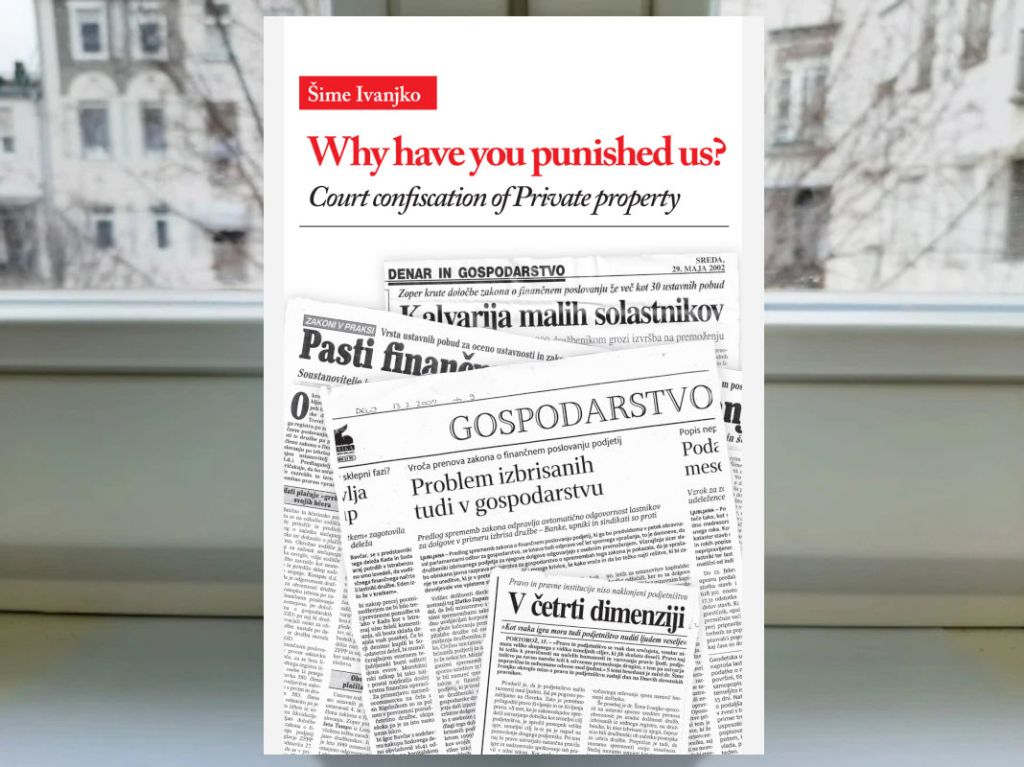
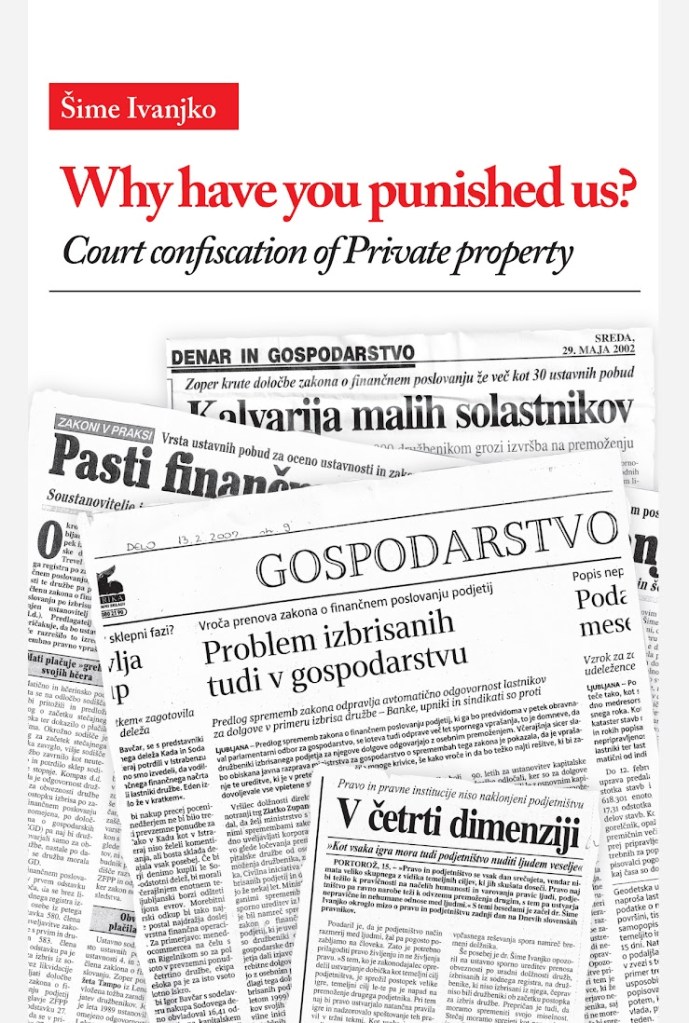
Šime Ivanjko: Why have you punished us?
Court confiscation of Private property
Although 25 years of effort have passed since the adoption of the ZFPPod in Slovenia, the process of finding fair solutions for the damage caused still has no end in sight.
The book is intended to inform the public and, in particular, those who will decide on the adoption of the draft law on the redress of injustice and its implementation in practice, should it be adopted. The book brings together legally relevant documents (explanations of laws, judicial decisions, expert publications, etc.). The first part of the book gives a detailed history of 25 years of work on the issue. The second part presents the statements of the affected shareholders, collected by the CINIP over several years, with brief legal commentaries. The third part provides a brief explanation of the Bill on the redress of injustice to shareholders of companies wiped out between 23 July 1999 and 16 November 2011.
Professor emeritus Dr. Šime Ivanjko, born in Croatia in 1940, is a longtime professor of economic law at the Faculty of Law of the University of Maribor. He is known as a consultant in the field of economy and the author of a large number of books and scientific and professional works. More than 1,750 of his bibliographic works are recorded in the Cobiss national bibliographic records. He has been dealing with the issue of deletion of legal entities for 25 years because he drafted the Act on the Financial Operations of Companies in 2999 on the order of the Government of R, and in the process of its adoption, the authority structures under the mentioned name of the law replaced the entire content. The purpose of his draft law was to protect the minor rules of family businesses. Its content was replaced by the statutory regulation of the deletion of the company and the ex lege transfer of the obligations of the deleted companies to the shareholders or partners. This substitution of substance was detrimental to entrepreneurship and contrary to the fundamental principles of corporate law. Over the past 25 years, he has actively advised tens of thousands of injured individuals and prepared several draft laws to eliminate harmful consequences that were passed in parliament but were not implemented in practice. The English edition of the book contains a description of the latest developments and subsequent findings in the field of remedial efforts aimed at informing the international public about unusual corporate legal arrangements unknown to any country.
 Založba knjig Kulturni center Maribor